The Power of Nothing: How Leaving Space Became Fashion's Boldest Statement

Photo by Photo by Simona Sergi on Unsplash on Unsplash
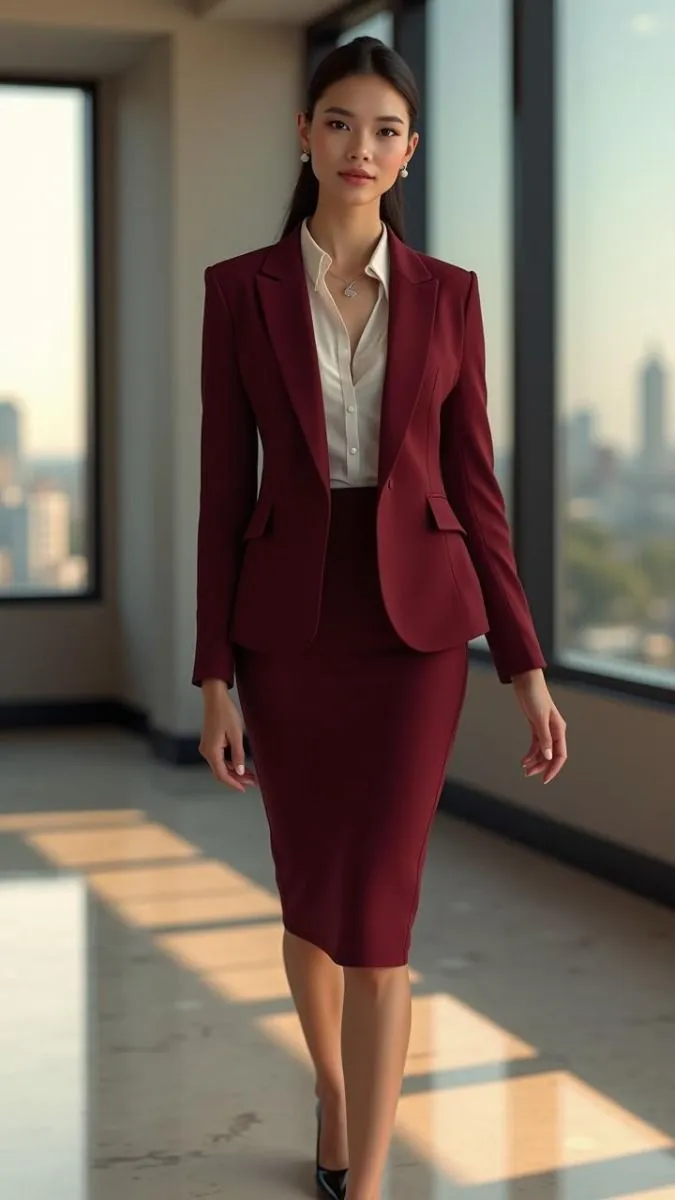
There's a particular kind of woman you've probably noticed lately. She walks into a room and something shifts — a subtle recalibration of attention, a collective pause. She's not draped in logos. She's not stacked with statement pieces. She might be wearing a single wide-leg trouser in a neutral so pure it almost hurts to look at, a structured top with nothing layered over it, and exactly one piece of jewelry. And somehow, she's the loudest person there.
That's the paradox of negative space in fashion, and it's one of the most quietly radical design philosophies circulating through contemporary American style right now. While the broader culture keeps screaming more — more content, more product drops, more visual stimulation — a growing number of women are leaning hard in the opposite direction. Not out of minimalism for minimalism's sake, but as a deliberate act of visual power.
What Negative Space Actually Means (And Why It Matters)
In design terms, negative space is the area around and between subjects — the breathing room that gives a composition its weight and intention. Graphic designers have known for decades that what you leave out is often more powerful than what you put in. Fashion, being the visual language it is, operates by the exact same rules.
When a silhouette has room to exist — when a jacket isn't buried under scarves and pins and layered necklaces, when a skirt's architectural cut can actually be seen — it commands attention in a fundamentally different way than something that's competing with itself for the eye. The brain, overwhelmed by visual noise, tends to skim. But a clean, intentional look stops the eye and holds it.
This isn't new knowledge, exactly. But what's shifted is the why behind the choice. For a long time, restraint in dressing was coded as conservative, even repressive — the idea that women should take up less visual space as a form of social compliance. Today's strategic emptiness flips that script entirely. It's not about disappearing. It's about making everything that remains impossible to ignore.
The Psychology of Choosing Less
There's real psychology at work here, and it's worth naming. Studies on visual perception consistently show that isolated elements carry more weight than cluttered ones — it's why a single bold word on a white page hits harder than a paragraph. When women apply this principle to how they dress, they're essentially saying: I know what I'm doing. I don't need to justify myself with volume.
That confidence — the ability to walk out the door with negative space intact and not fill it with anxiety — is genuinely hard to cultivate in a culture that equates more with effort and effort with worth. The woman who wears one thing well is making a statement that she doesn't need to prove herself through accumulation. That's not nothing. That's actually everything.
New York stylist and creative director Amara Osei, who works with a roster of high-profile clients in finance and media, puts it plainly: "The women who are truly secure in who they are don't need their clothes to do too much talking. They let the silhouette speak. The quality speaks. The fit speaks. And then they speak."
Emptiness as Anti-Consumption
There's also an undeniably political dimension to this conversation. The fashion industry's default mode is accumulation — new drops, new trends, new reasons to buy. Choosing negative space, both in a single outfit and in the wardrobe as a whole, is a quiet but firm rejection of that logic.
Women who build around emptiness tend to own fewer pieces and wear them more. A perfectly cut blazer in a strong neutral isn't meant to be buried in a closet rotation — it's meant to be worn, repeatedly, as a cornerstone. A single sculptural bag isn't a seasonal accessory; it's a long-term investment in a look that doesn't require constant updating.
This approach is gaining serious traction among professional women in their 30s and 40s who've done the fast-fashion cycle and come out the other side with a clearer sense of what they actually want. Less churn. More intention. Wardrobes that feel like a point of view rather than a collection of impulse buys.
How to Wear the Space
If you're drawn to this approach but not quite sure how to execute it without feeling underdressed or unfinished, a few principles help.
Start with silhouette. Choose one strong shape per outfit — a wide-leg pant, an oversized coat, a structured A-line skirt — and let it have the floor. Don't layer competing shapes on top of it.
Limit your palette. Negative space works best when color isn't fighting for attention. Two tones max, ideally with a clear dominant and a quiet accent. This doesn't mean boring — a chalk white shirt and a charcoal trouser is a full statement when the fit is right.
Edit your accessories like a ruthless copy editor. Put everything on, then take one thing off. Then ask yourself whether the second thing is earning its place. Often, it isn't.
Let fabric do the work. When you're not relying on embellishment or layering, the quality of what you're wearing becomes unmistakably visible. This is where investing in better fabric pays off in ways that are immediately, viscerally apparent.
Resist the urge to fill. The discomfort of leaving space is real, especially in social situations where fashion can feel like armor. Sit with the simplicity long enough to feel its weight. That weight is the point.
The Rooms That Notice
Where this philosophy becomes most visibly powerful is in professional and social spaces where women are often expected to compete visually — to perform femininity through abundance, to signal effort through decoration. The woman who shows up in a single strong look, fully edited, is doing something different from everyone else in the room. She's demonstrating that she doesn't need the noise.
And that, in 2025, is about as radical as fashion gets.
Negative space isn't a trend. It's a practice. One that asks you to trust yourself enough to leave room — in your outfit, in your wardrobe, in the visual story you're telling every time you get dressed. The women who've mastered it aren't minimalists in the ascetic sense. They're strategists. And they know that sometimes, the most powerful thing you can say is what you choose not to say at all.