Sharp Edges: How the New Tailoring Is Telling the World to Make Room
Let's be honest about what tailoring has historically meant for women. For most of the 20th century, when a woman put on a suit, she was essentially borrowing the language of men's power dressing and hoping it translated. The shoulder pads were an apology. The boxy cut was a disguise. The whole exercise was about minimizing femininity enough to be taken seriously in rooms that weren't built for her.
That version of structured dressing? It's gone. And what's replacing it is something far more interesting.
The Suit, Reimagined on Its Own Terms
The tailoring coming out of contemporary women's fashion right now isn't interested in mimicking masculine authority. It's building its own. Designers across the US and internationally are creating structured pieces — blazers, trouser suits, sharp-shouldered coats — that are unmistakably feminine and unmistakably powerful at the same time, without treating those two qualities as contradictions to be resolved.
Take Khaite, the New York-based label that has become something of a touchstone for this new tailoring sensibility. Creative director Catherine Holstein consistently produces structured pieces that feel simultaneously rigorous and deeply sensual — a blazer cut close to the body with a dramatic lapel, trousers with a precise break that lands exactly right. Nothing is soft in the apologetic sense, but everything feels alive. The structure serves the body rather than containing it.
Or consider Phoebe Philo's return to fashion, which sent the industry into collective orbit precisely because her approach to tailoring is so uncompromising. Philo builds clothes that demand a certain kind of attention — not the attention of being looked at as an object, but the attention of being reckoned with as a presence. That distinction matters enormously to the women who wear her work.
Why Now? The Cultural Context
It would be naive to talk about the resurgence of structured tailoring without acknowledging the cultural moment it's emerging from. Women in the US are navigating a landscape that is, in a lot of ways, asking them to shrink — politically, professionally, socially. The pressure to be accommodating, agreeable, and visually non-threatening hasn't gone away. In some contexts, it's intensified.
And fashion, as it always does, is responding.
When women reach for a sharply structured blazer right now, they're often doing something more than getting dressed. They're making a choice about how much space they're willing to take up. A well-constructed suit with strong shoulders and a precise fit is a physical assertion of presence. It says: I am here. I am intentional. I am not adjusting myself for your comfort.
That's not a small thing. And designers who are tuned into this cultural frequency are making pieces that carry that weight deliberately.
The Designers Doing It Right
A few names keep coming up when you talk to women who are serious about this new tailoring.
Sergio Hudson is one of the most important voices in this conversation. The South Carolina-born designer — who dressed Michelle Obama for the 2021 inauguration in that now-iconic plum suit — creates structured pieces that are deeply rooted in Black American elegance and an unapologetic sense of occasion. His tailoring doesn't whisper. It announces. And the women who wear it know exactly what they're saying.
Brandon Maxwell, another American designer with a strong tailoring program, builds suits that feel almost cinematic in their precision — the kind of clothes that make you feel like the protagonist of your own story the moment you put them on.
On the independent and emerging designer side, labels like Diotima (founded by Rachel Scott, who weaves Caribbean craft traditions into contemporary tailoring) and Edvin Thompson of Theophilio are expanding what structured dressing can look and feel like, bringing new cultural perspectives and aesthetic vocabularies to a category that has historically been very narrow in its references.
Structure as Creative Language
Here's what gets lost in conversations that frame tailoring purely as power dressing: structured clothing is also just beautiful. The architecture of a well-made blazer — the way a canvas chest piece holds a lapel, the geometry of a princess seam, the engineering that goes into a shoulder that sits perfectly without padding — is a form of design mastery that deserves to be appreciated on purely aesthetic terms.
This is something the new generation of tailoring-focused designers understands intuitively. They're not making suits as uniforms. They're making suits as art objects — pieces where the structure is expressive, where the cut is a creative decision with as much intentionality behind it as a brushstroke.
When a blazer has an exaggerated lapel that draws the eye upward, or a trouser has a silhouette that's slightly theatrical in its width, or a coat has a collar that frames the face like a painting — that's design speaking. And it's saying something specific about the woman wearing it: that she has taste, that she has vision, and that she made an active choice to be precisely this kind of person today.
Breaking the "Masculine vs. Feminine" Binary
One of the most exciting things about where tailoring is headed is its refusal to accept the old binary. For decades, structured clothing on women was coded as "masculine" — and the implicit message was that adopting it meant leaving femininity at the door.
Contemporary designers are blowing that framework apart. A blazer can be sharply structured and cut to celebrate curves. A trouser suit can be architectural and made in a color that's unapologetically feminine — dusty rose, cobalt, deep burgundy. Tailoring can be the vehicle for ruffles, for embroidery, for unexpected cutouts and sheer panels.
The point isn't to choose between structure and femininity. The point is that the choice was always a false one, and the new tailoring is finally making that visible.
How to Wear It Like You Mean It
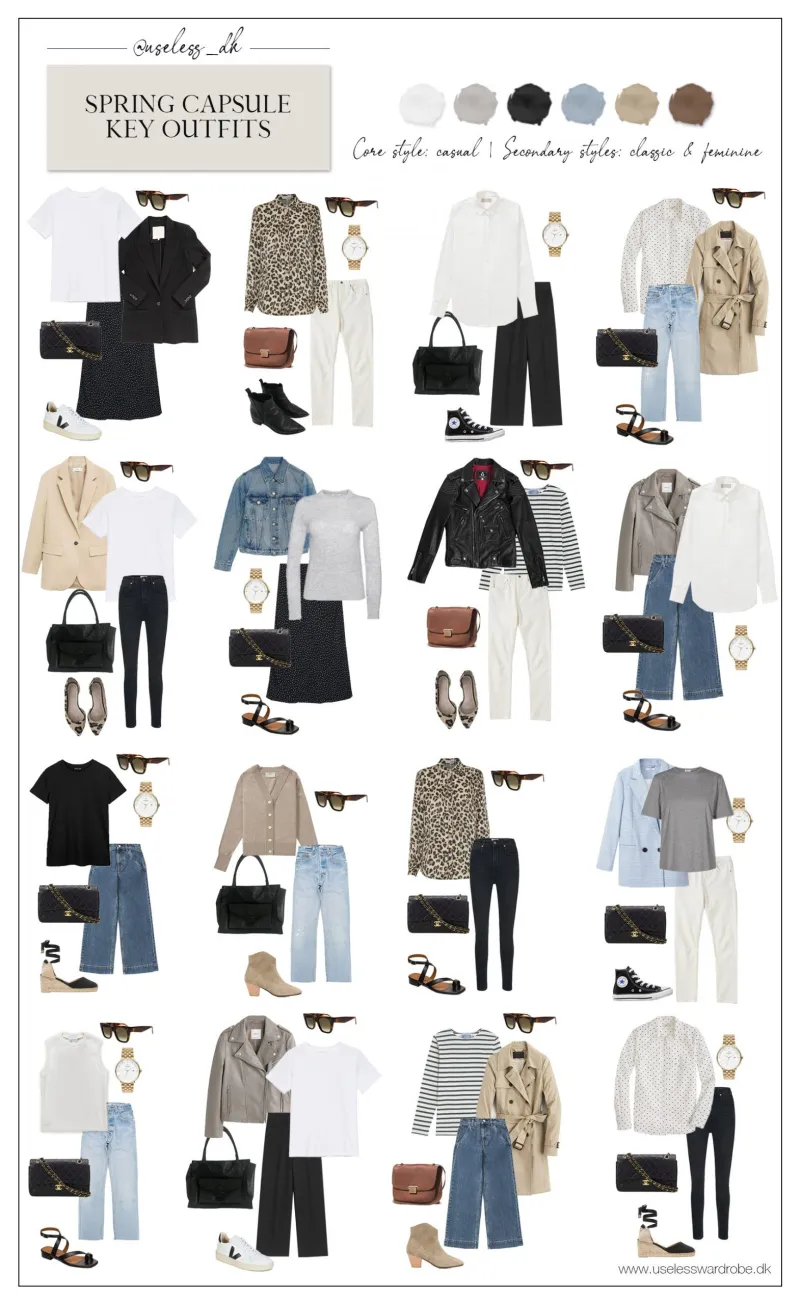
If you're building or refreshing a tailoring wardrobe, the most important thing is fit — not in the sense of conventional flattery, but in the sense of intention. A blazer that's slightly oversized can be a statement of ease and confidence. A trouser that's wide-legged and dramatic can be a declaration of presence. The key is that the fit feels chosen, not accidental.
Invest in at least one piece that feels slightly outside your comfort zone. A stronger shoulder than you'd normally reach for. A lapel that's more dramatic. A color that's louder. Tailoring rewards boldness — it's literally built for it.
And remember: the blazer you throw on over a band tee and jeans on a Tuesday is doing the same cultural work as the power suit in the boardroom. Every time you put on something structured and sharp, you're participating in this larger conversation about how women occupy space.
The Bottom Line
The new tailoring isn't about dressing like a man. It's not about performing professionalism for an audience that might not deserve the performance. It's about building a physical language of self-possession — one precise, architectural, unapologetic garment at a time.
Sharp edges were never the problem. They were always the point.