7 Experimental Fabrics Rewriting the Rules of Women's Fashion Right Now
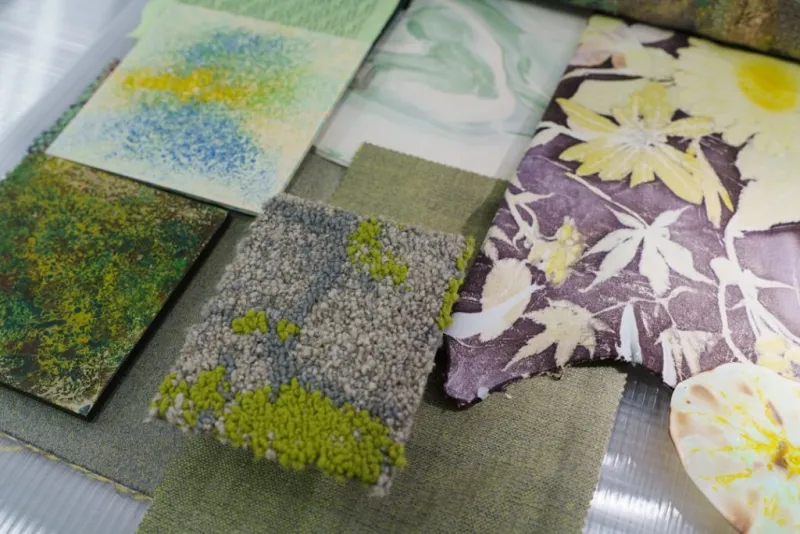
Photo: sustainable experimental textile fabric fashion designer studio lab material, via www.giftwrapper.app
The future of fashion doesn't look like what we expected. It doesn't look like silver jumpsuits or jetpack silhouettes. It looks like a jacket that was grown in a lab. A dress made from mushroom roots. A blazer that gets softer every time you wear it because it's literally alive.
We are here for it.
The conversation around sustainable fashion has matured well past reusable tote bags and organic cotton basics. Today's most forward-thinking designers — many of them women — are working with materials scientists, bioengineers, and textile innovators to create fabrics that are as conceptually rich as they are visually striking. And the best part? These aren't runway-only experiments. More of these materials are moving into small-batch ready-to-wear every season.
Here's what's actually worth paying attention to.
1. Mycelium Leather: The Mushroom That Replaced the Cow
If you haven't heard of mycelium leather yet, prepare to become obsessed. Made from the root structure of fungi, mycelium-based materials have a texture that genuinely rivals traditional leather — supple, durable, and with a subtle organic variation that makes each piece unique.
Designers like Stella McCartney have already brought mycelium into high-profile collections, but the really exciting work is happening at the indie level. Small studios are experimenting with dyeing and finishing techniques that give mycelium leather a range of aesthetics — from sleek and minimal to textured and almost geological.
For a brand like ours that believes bold design and ethical choices aren't mutually exclusive, mycelium leather is basically a dream material. It biodegrades. It doesn't require animal agriculture. And it looks incredible in a structured shoulder bag or a moto jacket.
2. Algae-Based Textiles: Fashion That Cleans the Ocean While You Wear It
This one sounds like science fiction, but it's very much science fact. Researchers and designers are developing textiles spun from algae — a material that, during its cultivation, actually removes carbon dioxide and excess nutrients from waterways.
The resulting fabric has a soft, slightly matte finish and takes natural dyes beautifully. Brooklyn-based designer Mara Voss has been one of the early adopters, incorporating algae-derived yarn into her knitwear collections. "It has this quality that's hard to describe," she says. "It feels intentional. Like the material has a purpose beyond just being pretty."
That ethos — beauty with a function — is exactly what the most interesting experimental fabric work looks like right now.
3. Lab-Grown Silk: All the Luxury, None of the Compromise
Traditional silk production has a complicated ethical footprint. Lab-grown silk — produced by engineering yeast or bacteria to generate silk proteins — offers the same luminous drape and sheen without the environmental and animal welfare concerns.
The texture is genuinely indistinguishable from conventional silk to most wearers, which means designers don't have to sacrifice anything aesthetically. Several luxury labels are quietly incorporating it into their supply chains, and as production scales up, expect to see it show up in more accessible price points.
For bold, feminine pieces — fluid bias-cut dresses, dramatic blouses, statement scarves — lab-grown silk is a material that lets the design do the talking.
4. Thermochromic Fabrics: Clothes That Change Color With Your Body Heat
Okay, we're going full maximalist for a second because thermochromic fabrics exist and they are extraordinary.
These textiles are embedded with pigments that respond to temperature changes — meaning a garment can literally shift colors as you move through your day, responding to body heat, sunlight, and environment. The effect ranges from subtle (a slight deepening of tone) to dramatic (a complete color transformation).
Avant-garde designers have been playing with thermochromics for years, but newer formulations are more stable and wash-safe, making them viable for actual wearable pieces rather than just art installations. Imagine a dress that's deep indigo in an air-conditioned room and blooms into violet and rose when you step outside. That's not a mood ring. That's a whole vibe.
5. Deadstock Reconstruction: The Fabric That Already Existed
Not every experimental material is brand new. Some of the most innovative design work happening right now involves deadstock — fabric that was produced, never used, and would otherwise end up in a landfill.
What makes deadstock work genuinely experimental is the constraint. Designers working with deadstock can't just order more of something. They have to work with exactly what exists, which pushes creative problem-solving in fascinating directions. Seams become design features. Remnants get pieced into intentional patchwork. Scarcity becomes the aesthetic.
Denver-based label Remnant Theory has built their entire identity around this approach, and their pieces have a one-of-a-kind quality that no conventional production run can replicate. Every garment is, by definition, limited edition.
6. Bio-Fabricated Cellulose: Fabric Grown on a Frame
Bacterial cellulose is exactly what it sounds like — a material produced by bacteria that, when grown on a form, takes on that shape as it solidifies into a textile. Designers can literally grow a garment rather than cutting and sewing one.
The resulting material is thin, slightly translucent, and has an organic texture that no loom can replicate. It's also completely compostable. Pioneer designer Suzanne Lee has been one of the loudest advocates for this technology, and her work has demonstrated that bio-fabricated cellulose can move from petri dish to runway without losing any of its conceptual power.
For fashion that's meant to make a statement about the relationship between nature, technology, and the body — which is pretty much what we're always interested in here — this material is unmatched.
7. Recycled Ocean Plastic Yarn: High Performance, High Conscience
This one has moved furthest from the experimental category into mainstream availability, but it still deserves a spot on this list because the design applications keep getting more interesting.
Yarn spun from recovered ocean plastic has been around for a few years now, but early versions were limited in texture and finish. Current iterations are genuinely versatile — soft enough for knitwear, structured enough for outerwear, and available in a wide enough range of weights to work across categories.
What's exciting is watching designers use this material not as a quiet ethical footnote but as a feature. Labeling that highlights the material's origin story, design choices that reference water and movement, collections explicitly built around the narrative of transformation. That's the kind of storytelling that turns a fabric into a statement.
The Takeaway: Materials Are the Message
At Pink Dragon Studio, we believe that what something is made of is inseparable from what it means. The designers pushing experimental materials aren't just solving logistical problems or chasing sustainability credentials — they're expanding what fashion can say.
When your dress was grown from mushrooms, or your jacket changes color with your body heat, or your knitwear was pulled from the Pacific Ocean — that's not just a garment. That's a whole philosophy you're wearing.
And honestly, that's the boldest design choice of all.