Dressed to Lead: How Women Are Rewriting the Language of Power Dressing
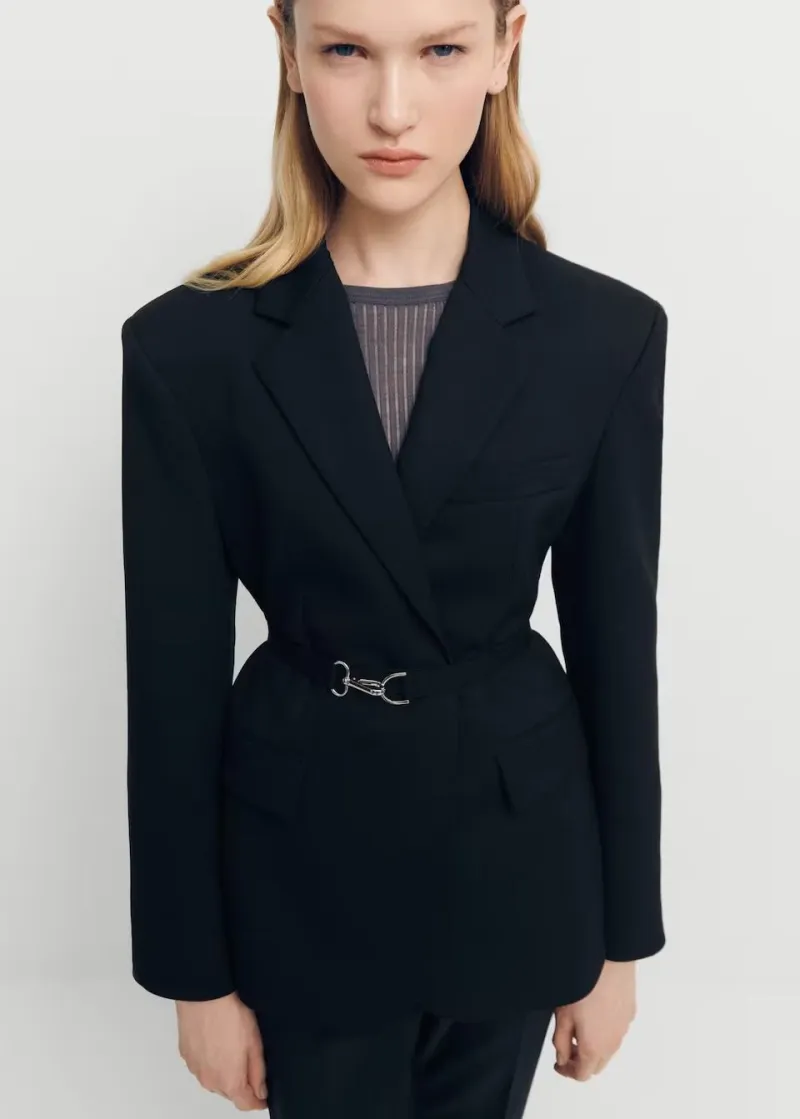
Photo: modern women's tailored blazer structured fashion editorial bold color, via i.pinimg.com
There's a photo that gets passed around in fashion circles whenever someone wants to talk about '80s power dressing. You know the one — sharp shoulders, boxy silhouette, a woman in a boardroom who looks like she borrowed her authority from a man's closet and safety-pinned it on. For decades, that image was the blueprint. If you wanted to be taken seriously, you dressed like you were trying to disappear into a sea of gray suits.
We are so far past that now.
Contemporary women's tailoring is in the middle of a full-blown identity revolution, and the designers leading the charge aren't softening power — they're redefining what it looks like altogether. The result is a new category of dressing that's structured without being stiff, authoritative without being imitative, and deeply, unapologetically feminine in the most modern sense of that word.
The Problem With the Original Blueprint
The 1980s power suit was never really designed for women. It was designed to help women pass — to signal that they could operate in spaces historically coded as male. The shoulder pads weren't just fashion; they were a kind of camouflage. And while there's something worth acknowledging about the audacity of that moment, the underlying message was pretty grim: your natural body, your natural femininity, is a liability. Pad it out. Square it off. Make it less you.
That framework lingered way longer than the shoulder pads did. Even through the minimalist '90s and the hyper-feminine 2000s, the idea that professional dressing meant toning yourself down — your color, your curve, your personality — stubbornly persisted in corporate America. The "dress for the job you want" advice almost always defaulted to a version of dressing that erased distinctiveness rather than celebrated it.
What we're seeing now is a genuine reckoning with all of that inherited logic.
Structure as Self-Expression
Here's the shift that matters: today's designers are using structure not to constrain the female form, but to celebrate it. There's a difference between a jacket that boxes you in and a jacket that holds you together — and the best contemporary tailoring understands that distinction intimately.
Think about the way a perfectly constructed blazer with a nipped waist and unexpected fabric — a silk brocade, a sculptural knit, a hand-painted canvas — can feel like armor and art simultaneously. Or how wide-leg trousers with a razor-sharp crease communicate authority while still moving beautifully with the body. These aren't compromises between power and femininity. They're proof that the binary was always false.
Emerging designers like those coming out of Parsons and RISD are experimenting with asymmetrical closures, exaggerated lapels, and structural details borrowed from architecture rather than menswear. The reference points have changed. Instead of asking "what does a powerful man wear?" the new question is "what does a powerful woman feel like?" — and that question opens up a much more interesting design space.
The Psychology of Getting Dressed for Authority
Fashion psychologists have been talking about "enclothed cognition" for years — the idea that what we wear genuinely affects how we think and perform. But the conversation has evolved. It's not just about wearing something that signals power to other people. It's about wearing something that makes you feel grounded, capable, and fully yourself.
That's a crucial distinction. The old power dressing was performative in a very external way — it was a costume designed for an audience. The new version is more internal. Women are asking what makes them feel most like themselves while also feeling ready to walk into any room and own it. And the answer, increasingly, is not a uniform borrowed from someone else's wardrobe.
This is why color has become such a loaded choice in professional dressing. Wearing a cobalt suit or a deep burgundy blazer to a meeting is no longer read as unprofessional — it's read as intentional. As someone who knows exactly who they are. That confidence, it turns out, is far more authoritative than any shoulder pad ever was.
Feminine and Fierce Aren't Opposites
One of the most exciting things happening in contemporary tailoring is the deliberate incorporation of traditionally "feminine" design details into structured, authoritative silhouettes. We're talking about draped fabrics cut into sharp suiting shapes. Floral embroidery on a structured trench. A beautifully constructed blazer worn over a slip dress in a way that feels powerful rather than apologetic.
Designers like Collina Strada and emerging BIPOC-owned labels are particularly brilliant at this — creating pieces that hold multiple identities at once without any of them canceling each other out. The work doesn't ask you to choose between softness and strength, between beautiful and serious. It assumes you're already both.
That assumption is, honestly, kind of radical. Fashion has spent a long time asking women to simplify themselves for the sake of a legible aesthetic. The new power dressing refuses that simplification.
Building Your Own Authority Wardrobe
So what does this actually look like in practice? Here's the thing — it looks different for everyone, which is kind of the whole point. But there are a few principles worth holding onto.
First, invest in structure. A well-tailored piece — one that actually fits your body and holds its shape — will always communicate more confidence than something oversized or sloppy, no matter how on-trend it is. Structure is the foundation.
Second, let color and detail do work. You don't have to wear neutrals to be taken seriously. A bold color or an interesting texture isn't a distraction — it's a statement of intentionality, and that reads as authority.
Third, dress for yourself first. The most powerful thing you can wear is something that makes you feel like the fullest, most grounded version of yourself. That internal alignment shows up in the way you carry yourself, and no amount of strategic dressing can replicate it.
The armor paradox, it turns out, isn't really a paradox at all. The most protective thing you can wear is something that makes you feel completely, unapologetically you. And that's a design brief that's finally getting the attention it deserves.