The Tape Measure Lie: How Sizing Became Fashion's Oldest Gaslight
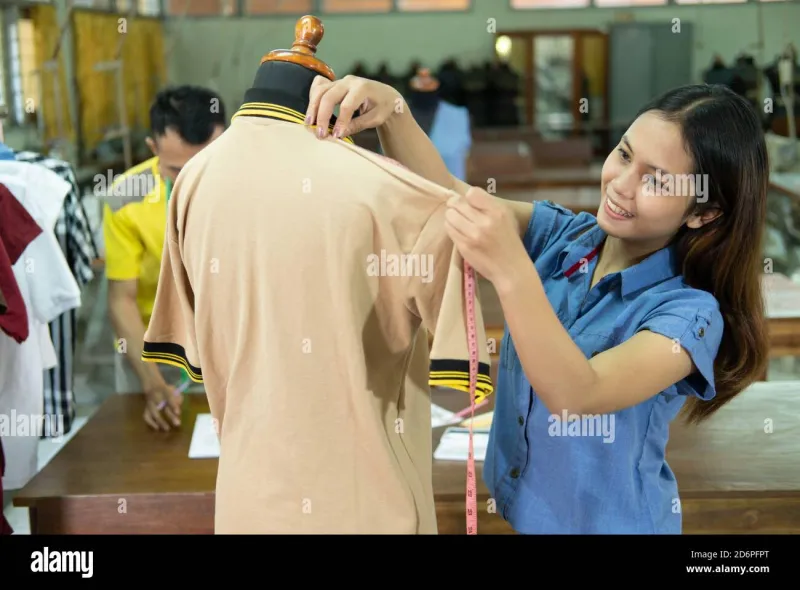
Photo: woman tailor measuring tape fitting clothing studio, via c8.alamy.com
Here's a fun experiment: walk into two different stores in the same mall, pick up the same size, and try them on. One might zip. One might not get past your hips. Neither of these things says anything about your body — but the industry has spent seventy years quietly implying otherwise.
A System Built on a Single Soldier
American sizing wasn't invented for women. It was invented for the military. During World War II, the government needed to standardize measurements to mass-produce uniforms efficiently, and after the war, those body-data sets got cranked through the industrial machine and applied to civilian clothing — including women's wear, despite the original data being pulled almost entirely from male bodies.
From the jump, then, women's sizing was a translation error. And then vanity sizing entered the chat. As marketing psychology took over in the decades after, brands discovered something magical: if you slap a smaller number on the tag, women feel flattered and buy more. So the numbers inflated. A size 8 today is roughly what a size 16 was in the 1950s. The measurements didn't change. The labels did. Which means the number on your tag was never a measurement. It was a mood.
The Dragon's Hoard Problem
At Pink Dragon, we think about fit the way a dragon thinks about gold: it has to be yours. Nothing off the shelf — no matter how expensive — carries the specific topology of your shoulders, your waist, the way you stand. Standardized sizing asks women to contort themselves toward an average that doesn't actually exist. Roughly 90% of women report difficulty finding clothes that fit well, and the industry's answer has been to make us feel like the defect.
But here's the shift happening right now: made-to-measure startups are treating custom fit not as a luxury service but as infrastructure. Companies like eShakti, Minnie + George, and a wave of body-scan-driven platforms are building businesses on the radical premise that the garment should adapt to the body — not the other way around. 3D scanning, AI pattern drafting, and small-batch domestic manufacturing have collapsed the cost of customization to something approaching off-the-rack prices.
What Changes When It Actually Fits
Ask anyone who's had a garment made for them and they'll tell you the same thing: it rewires your relationship with your closet. When clothes fit, you stop dressing around your insecurities and start dressing around your intentions. You stop buying seven versions of the same blazer hunting for one that works, which — bonus — is genuinely the most sustainable move in fashion.
There's also a political dimension worth naming. Fit is power. The women who command rooms in sharp tailoring aren't wearing magic fabric; they're wearing clothes cut to their bodies. Historically, that level of fit required a tailor, which required money, which meant fit was a class marker. Democratizing made-to-measure is really about democratizing the confidence that comes with it.
How to Shop Like a Dragon Right Now
You don't need to wait for the industry to fix itself. A few moves:
- Learn your actual measurements. Not your size — your measurements. They're the real data; sizes are the propaganda.
- Read size charts like a contract. Every brand's chart is different. Ignore the number entirely.
- Budget for tailoring. A $60 alteration on a $150 blazer produces a garment worth more than a $400 one off the rack.
- Try one custom piece. One made-to-measure item will ruin standard sizing for you, in the best way.
The tag was never telling the truth about you. It was telling the truth about a supply chain built for efficiency, not for bodies. Time we stopped taking notes and started taking measurements.