Less Is the New More: Why the Most Stylish Women You Know Have Stopped Buying So Much
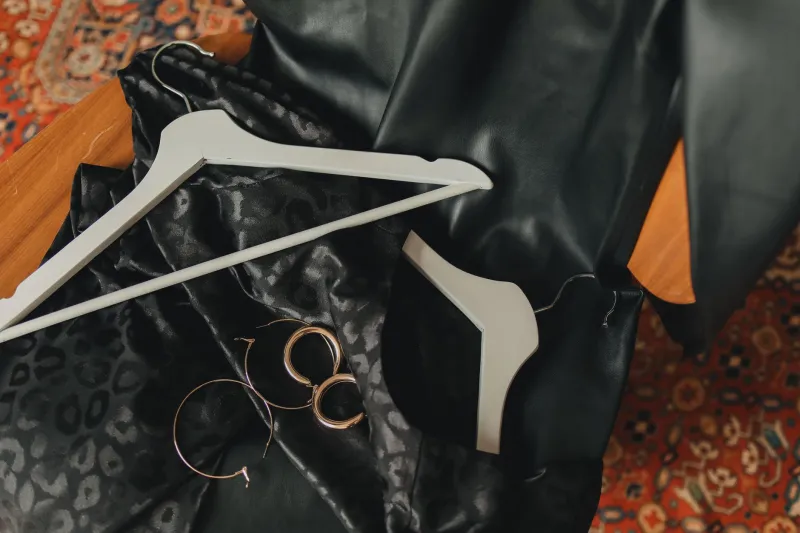
Somewhere between the third micro-trend of 2024 and the fourteenth "must-have" of the season, something broke. Not for everyone — the fast fashion machine is still running at full speed. But for a specific, increasingly influential group of fashion consumers, the whole performance started to feel exhausting.
These are women who can afford to buy more and are actively choosing not to. Not out of austerity. Not out of minimalism as an aesthetic. But because they've figured out something the industry doesn't want them to know: the real power move is curation.
The Death of More
For most of the 2010s, fashion's cultural currency ran on volume. More pieces, more variety, more references, more stuff. Haul culture made quantity a spectator sport. Trend cycles compressed until seasons were barely weeks long. The implicit message was: if you're not keeping up, you're falling behind.
The women opting out of that race aren't anti-fashion. They're post-trend. And there's a meaningful difference.
Post-trend dressing isn't about ignoring what's happening in the industry — it's about filtering it through a much more personal lens. It asks: does this serve my aesthetic, my life, my actual body? Not: is this what everyone is wearing right now?
The result is wardrobes that look more intentional, more individual, and — this is the part that stings for fast fashion — more expensive-looking, even when they're not.
Curation as Cultural Capital
We've entered an era where taste has become the ultimate status signal. Not the taste that's demonstrated by a logo or a price tag, but the kind that's visible in the edit — what you chose to keep, what you passed on, how the pieces you own work together.
This is a shift that's been building for a while. You can see it in the resurgence of investment dressing — women buying one exceptional coat instead of three mediocre ones. You can see it in the way certain designers with deeply considered, consistent aesthetics have developed almost cult-like followings: Toteme, The Row, Lemaire, Khaite. These aren't brands chasing the algorithm. They're brands with a point of view, and their customers are women who share it.
You can see it in the secondhand market, too. The most desirable vintage pieces aren't random — they're specific, chosen, right. A perfectly worn Levi's 501 from 1992 isn't just a jean. It's a curatorial statement.
What the Designers Building This Moment Understand
The labels thriving in this climate share a few common traits worth paying attention to.
First, they have a consistent visual identity that doesn't lurch from season to season. When you buy from them, you're buying into a world, not just a garment. That world has a coherent set of values — about materials, about construction, about what a woman's wardrobe should actually do for her.
Second, they make things that last. Not just physically (though that matters), but aesthetically. A piece that looks as relevant in five years as it does today isn't timeless in the passive sense — it's designed to resist obsolescence. That's an active, intentional choice on the part of the designer.
Third, they trust their customer. They're not explaining themselves with trend reports or justifying each collection in terms of what's happening in the cultural moment. They're making work that speaks for itself, for a woman who has developed enough of her own aesthetic to recognize what belongs in her life.
Designers like Toteme's Elin Kling and Karl Lindman have built an entire brand on this premise — that quiet, considered design for women who are done being sold to is a genuinely underserved market. The brand's growth has been remarkable precisely because it doesn't try to be everything.
The Sustainability Angle Nobody's Overstating
It would be easy to frame strategic curation purely as an aesthetic or economic choice, but the environmental dimension is real and increasingly central to why younger consumers are embracing it.
Fast fashion is the second-largest polluter in the global textile industry. The mathematics of buying less are straightforward: fewer purchases, less waste, less pressure on the supply chains that have historically been the industry's ugliest open secret.
But for many women making this shift, the sustainability argument is less of a motivator than it is a validation. They're not buying fewer things because of the environment — they're doing it because it feels smarter, more aligned with who they are, more them. The environmental benefit is a bonus they're happy to claim.
The Wardrobe as Self-Portrait
Here's what the curation shift is really about: a wardrobe that functions as a genuine self-portrait rather than a collection of things you were told to want.
When you stop buying to keep up and start buying to build something, the whole relationship with your closet changes. Every piece earns its place. Getting dressed stops being a daily negotiation with a bunch of things you don't love and starts being an expression of something real.
At Pink Dragon Studio, we've always believed that bold design and fearless femininity aren't about volume — they're about clarity. The most striking women in any room aren't wearing the most. They're wearing exactly the right things, chosen with conviction.
That's not restraint. That's taste. And right now, taste is the most powerful thing you can wear.